



Canhoto and the birth of Brazilian guitar
Abismo de Rosas — Abyss of Roses — is one of the most enduring pieces in the Brazilian guitar repertoire. It was written around 1916, and it’s still being played, recorded, and arranged over a century later. To understand why, you need to know something about the man who wrote it and the tradition he helped create.
Américo Jacomino, known as Canhoto — “left-handed” — because he played the guitar in inverted position without reversing the strings, was a pioneering guitarist and composer working in São Paulo in the early twentieth century. He was one of the first Brazilian musicians to establish the solo guitar as a serious concert instrument rather than just an accompaniment for singers. At a time when the guitar was still looked down on by the classical establishment in Brazil, Canhoto was filling theatres.
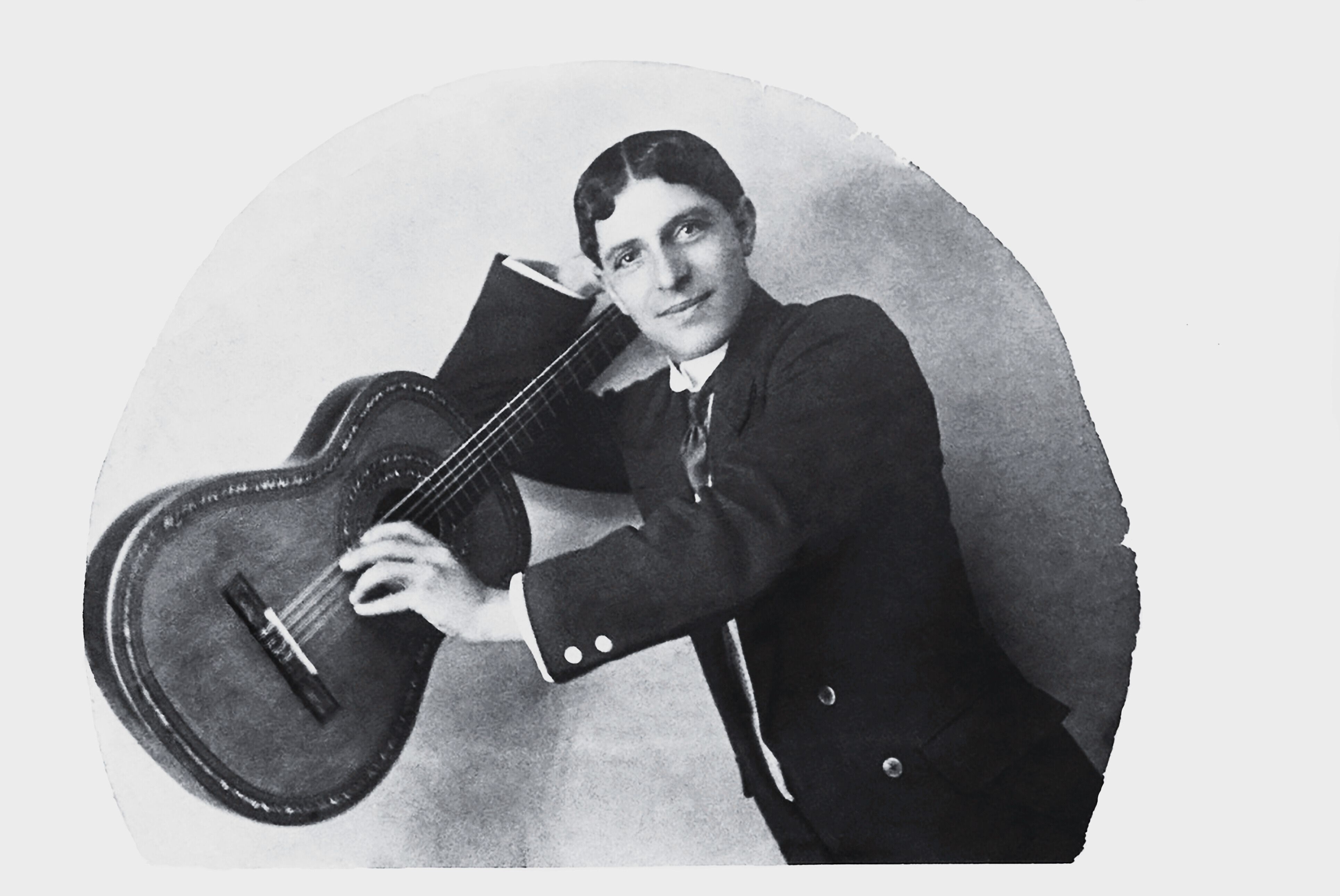
His compositions are rooted in the choro tradition — the sophisticated instrumental music that had been developing in Rio de Janeiro since the late 1800s. Abismo de Rosas is a valsa-choro — a Brazilian waltz — and it has everything that made Canhoto’s music last: a lyrical, romantic melody, a clear formal structure, and an elegance that rewards both the listener and the performer. The harmony is traditional by modern standards — functional cadences, standard tonalities, no chromaticism to speak of — but the beauty of the piece is in the melodic writing. It didn’t need harmonic complexity to become a classic.
Baden Powell
Half a century after Canhoto wrote Abismo de Rosas, Baden Powell recorded his own arrangement of it in 1980 — demonstrating the development of Brazilian guitar over those fifty years.
Baden Powell de Aquino was born in 1937 in Varre-Sai, in the state of Rio de Janeiro. His father named him after the founder of the Boy Scouts, and the family home in the Rio suburb of São Cristóvão was a regular gathering place for musicians, including Pixinguinha and Donga, two giants of early Brazilian popular music. He began guitar lessons in the 1940s with Jayme Florence, known as Meira, one of the leading choro guitarists of the era. By the time he was a teenager he was winning talent competitions, and at fifteen he was playing professionally.
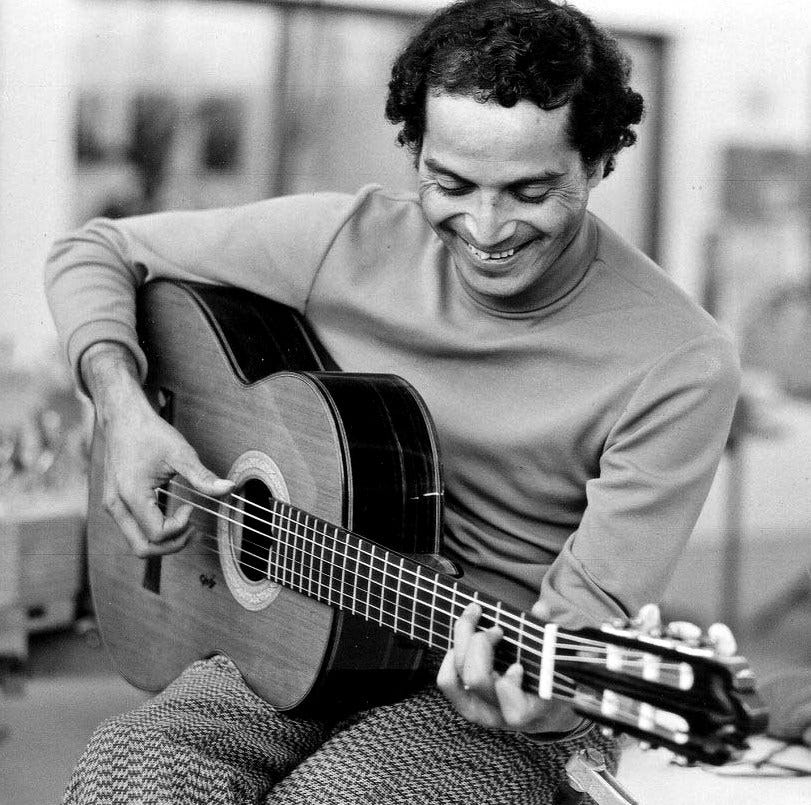
In the mid-1950s he joined pianist Ed Lincoln’s trio at the Bar Plaza in Copacabana, where his playing caught the attention of Antônio Carlos Jobim. He studied advanced harmony with Moacir Santos, and later cited Garoto — Aníbal Augusto Sardinha — as a key influence, alongside Dilermando Reis and Django Reinhardt. In 1962, he met the poet and diplomat Vinícius de Moraes, beginning a partnership that produced some of the defining music of the decade, including the landmark 1966 album Os Afro-Sambas. While bossa nova was the prevailing sound, Baden Powell and Vinícius were reaching further — combining samba with Afro-Brazilian ritual music from the candomblé and capoeira traditions. He was the house guitarist for Elenco Records and appeared regularly on Elis Regina’s television show O Fino da Bossa.
At nineteen, he made the decision to stop playing electric guitar entirely, concentrating on classical guitar for the rest of his career. He recorded prolifically — for Elenco and Forma in Brazil, Barclay in France, MPS/Saba in Germany — and toured Europe extensively through the 1960s before relocating permanently to France in 1968. His later recordings, made after returning to Brazil in the 1990s, are intimate solo guitar and voice performances.
Listen to Baden Powell’s 1980 recording of Abismo de Rosas:
The score
Baden Powell’s arrangement of Abismo de Rosas reimagines the harmonic foundation of the composition. The result sounds deceptively simple and warm — a listener hears a beautiful waltz — but the underlying craft is rich jazz harmony.
I’ve just published an edited transcription of this arrangement with full harmonic analysis throughout — chord symbols above the staff labelled by function, Roman numeral analysis below, and a set of Brazilian Harmony Study Notes explaining the key patterns.
Despite the sophistication of the harmony, this arrangement is technically accessible. The positions are comfortable, it doesn’t demand virtuosity, and a relaxed performance works beautifully. The main challenge is sustaining focus through a longer piece — it has three full sections plus a reprise. The score includes standard notation and TAB, and a study guide outlining Baden Powell’s harmonic approach.
Pick it up here: Abismo de Rosas — Study Pack
I publish solo guitar arrangements and studies with full harmonic analysis — standard notation, TAB, chord symbols, and Roman numeral analysis. Browse the product catalogue on my online shop. If you’ve found this useful, you can also buy me a coffee or become a paid subscriber.