


Like most people who come to the guitar as adults, I started by getting some arrangements and learning to play them.
What I noticed after a while is that I would play an arrangement over and over and it just did not sound very satisfying.
No matter how much I practiced, these guitar arrangements seemed to lack something, and the satisfaction I expected from playing them never quite arrived.
Later, when I moved on to jazz, I came across the work of Ted Greene, a well-known figure in solo jazz guitar circles whose teaching was very focused on chords.
There is a video of Greene teaching a student, in which he runs through his arrangement of Black Orpheus, playing tasty jazz chords and whistling the melody.
The student observes that he is not playing it in a bossa nova rhythm, and Greene replies that he can play the rhythm if he wants to, and the melody too if he wants to, but what he really cares about are the chords.
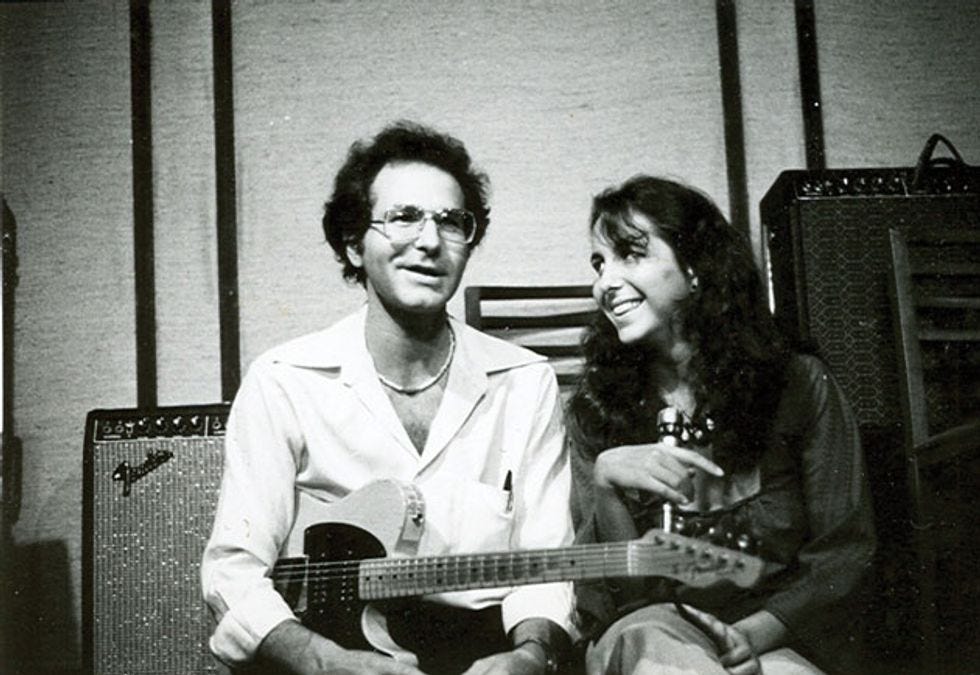
Watching this, I realised that Greene does not really care about the literal surface of the tune at all, but about the harmony, because the chords are what make the piece sound the way it does to him, and the melody and rhythm are things that can be added or merely implied.
I tried this approach myself, finding nice chords and playing the melody on top of them with the focus on the harmony, and something about the music finally clicked into place.
What I realised at that moment is that jazz musicians, or at least some of them, have a radically different view of music from classical players who look at a score and play what is written
For the jazz musician the tune is scaffolding and raw material for interpretation.
There is a video of Glenn Gould, the Canadian pianist famous for his unorthodox recordings of Bach’s Goldberg Variations, discussing more or less exactly this idea in the context of classical music itself.
Gould was an odd genius, who sat on a chair lacking a seat while performing, and in the 1950s and 60s he made programs for Canadian television discussing classical music.
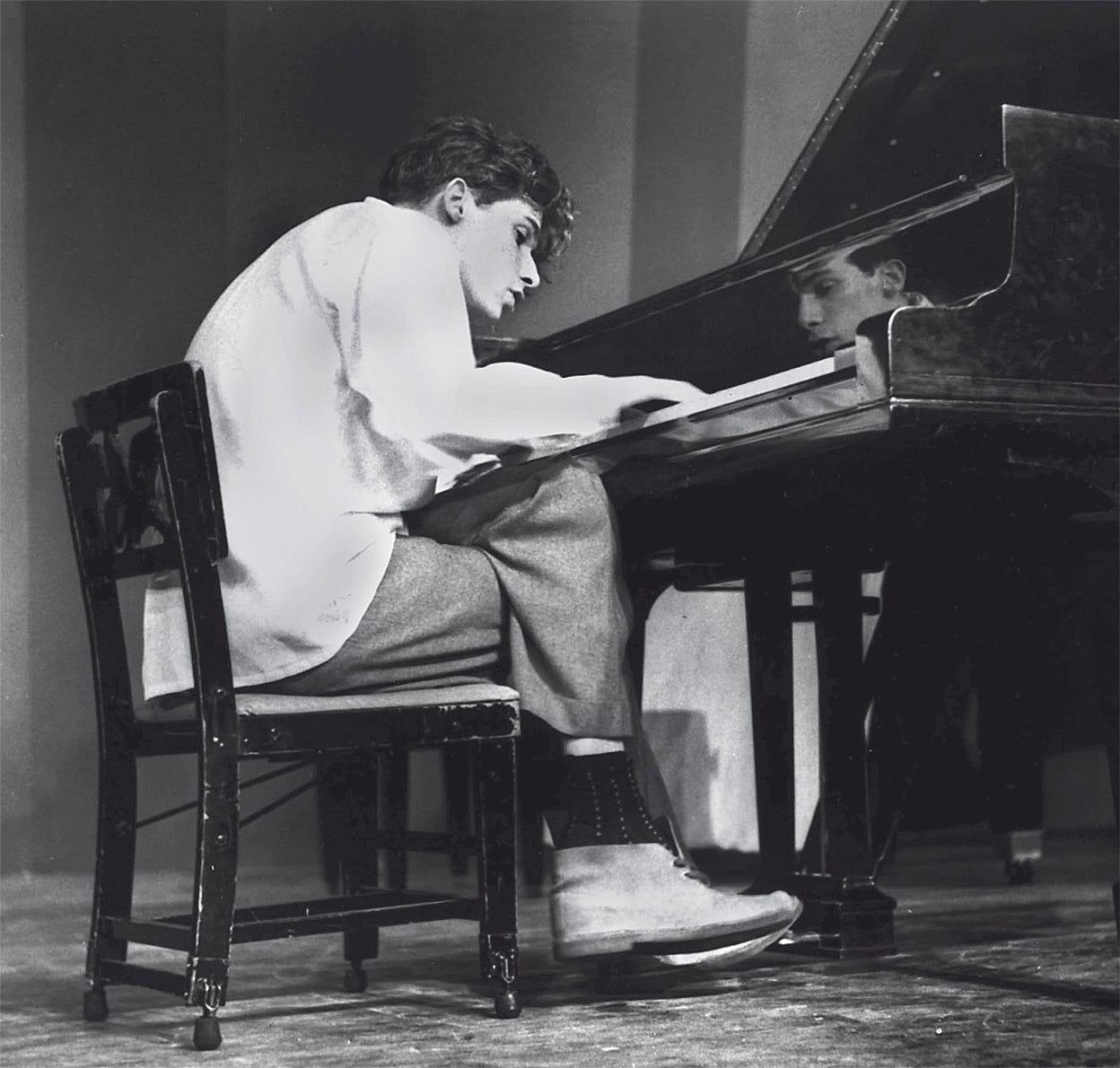
What he said is that he considered the score to be material for interpretation and a performance to be an act of composition, because you can play the same piece in any number of ways depending on what you emphasise — the inner voices, the outer voices, the phrasing, the timing.
This is exactly how Ted Greene approached a jazz standard like Black Orpheus, where the tune was just the starting point for his own interpretation, which in his case meant choosing tasty chords and letting the melody be suggested rather than stated literally.
You could call this approach impressionistic, in the sense that just as one painter might depict a subject realistically with every detail he sees, another painter will have a more impressionistic style.
So two musicians can take the same tune and treat it in radically different ways.
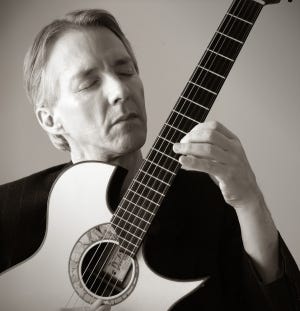
A good example of this in modern jazz guitar is John Stowell, who builds his playing around extended, harmonically rich arpeggiated chords, with the melody serving as a thread that connects them rather than as the centrepiece.
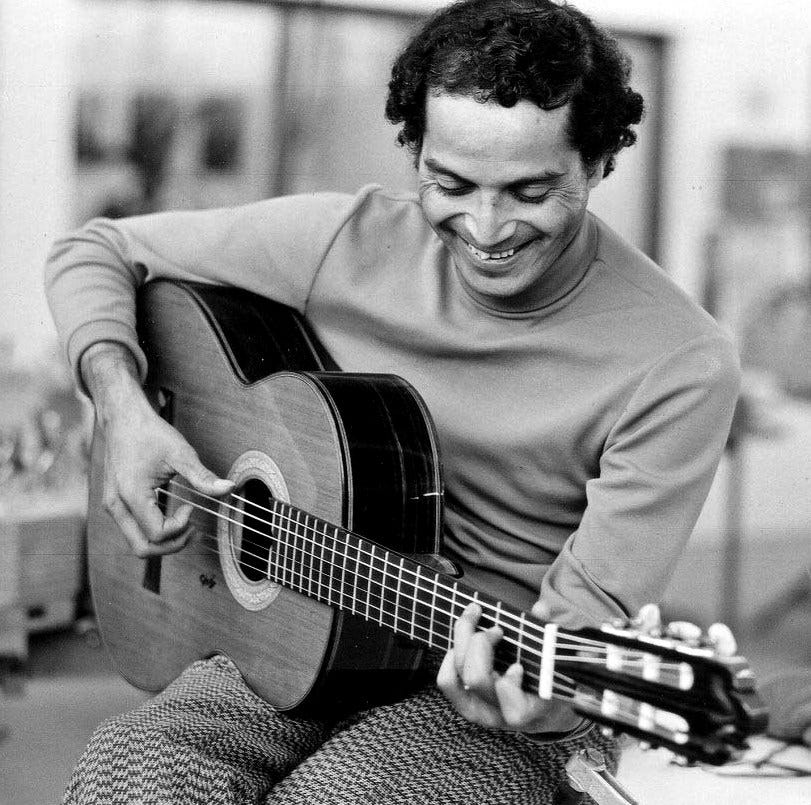
When you look at Baden Powell’s recordings and the transcriptions made from them, the question is which school of thought he belongs to, and to my mind he clearly belongs to the impressionistic school and is probably one of the pivotal figures who shaped it on the guitar.
I don’t know how aware these musicians were of each other, but Gould was very influential in classical music and the impressionistic approach is essentially the modern jazz approach, so to some extent these worlds were connected.
Stowell holds Brazilian music in very high regard and has a number of Jobim’s tunes in his repertoire, with an approach closely related to Baden Powell’s — though Powell preceded him by a couple of decades.
If you interpret Baden Powell’s recordings literally, in the way a classical musician might interpret a Bach score, the result might not have the rubato fluidity, especially as his approach is heavily arpeggiated which resists being pinned to the page.
If you try to translate his playing directly into a score through transcription, the result will not be very readable or navigable, whereas if you simplify the transcription enough to make it readable, then playing it very literally might sound somewhat rigid.
A readable arrangement of his playing is really meant to be a guide rather than being read literally the way a classical guitarist might read a Bach piece.
On the other hand, you can’t just go to a recording and try to copy Baden Powell from that either, because that will probably also end up sounding a bit superficial.
What you have to do is get a feel for his approach using his recordings and the arrangement as a guide to develop your own interpretation, in the same way a jazz musician looking at a ii-V7-i might treat those chords as material for improvisation rather than as a fixed sequence to be executed.
You can put those chords into a score and a classical musician will read them literally, but the fact is that you can arpeggiate them in twenty different ways, in different orders, emphasising different notes, and the classical approach does not really work in this more impressionistic style.
A bare chord chart does not contain enough information to guide you through a piece like this.
A full arrangement based on a transcription contains more detail but cannot quite be played literally either.
So the only workable approach is to read it with a jazz improvisational mindset where the notes on the page are material rather than instructions that have a ‘correct’ execution.
You understand that a given passage is a ii–V–i and you develop your way through it, because those notes only represent what Baden Powell happened to play in one particular recording session and he never played the same tune the same way twice.
This is not the kind of improvisation you find in a jazz solo, nor is it the classical approach to a written score, but rather a position somewhere in-between the two where the transcription is a guide and the player’s job is to provide and interpretation.
Once you have played an arrangement a few times and have it under your fingers, you can begin to play it more interpretively in the sense that Glenn Gould would recommend, treating the written score in a more improvisational way.
Two interpretive approaches to Black Orpheus/Manha de Carnaval, both influenced to some extent, in a different way, by Bach:
John Stowell’s modern jazz interpretation of Tom Jobim’s If You Never Come/Inutil Paisssagem:
I publish solo guitar arrangements and studies with full harmonic analysis — standard notation, TAB, chord symbols, and Roman numeral analysis. Browse the product catalogue on my online shop. If you’ve found this useful, you can also buy me a coffee or become a paid subscriber.
This is absolutely fascinating, and answers some of the questions I’ve been having as I struggle to learn jazz guitar as a middle-aged man. I was sort of classically-trained (but not on guitar) and I’ve struggled so much with everything sounding so wooden. The concept of “musical Impressionism” really struck me.
Superb piece! Thank you!