


Jazz Level 0: Triads
There are seven notes in a scale. In the C major scale the notes are:
C D E F G A B
Each note is a ‘degree’ in the scale:
1st, 2nd, 3rd, 4th, 5th, 6th and 7th.
A chord is created by adding (‘stacking’) every other note in the scale.
A basic chord is called a ‘triad’ which is made up of the three basic tones: 1st 3rd and 5th.
So the C triad is made up of C - E - G.
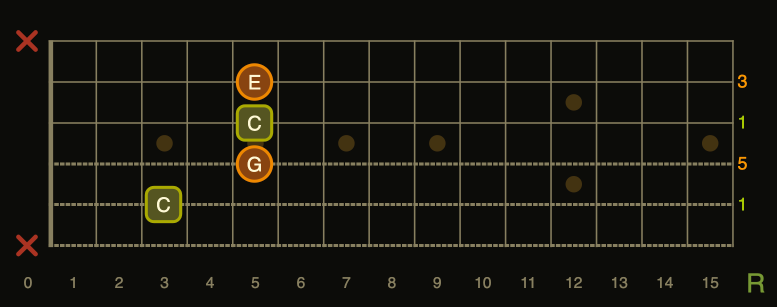
There are two basic kinds of triads used by guitarists who are starting out: major and minor.
A minor chord is created by flattening the 3rd.
So a C minor is: C Eb G.
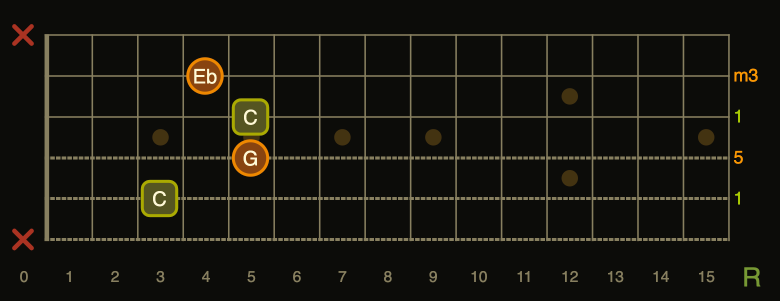
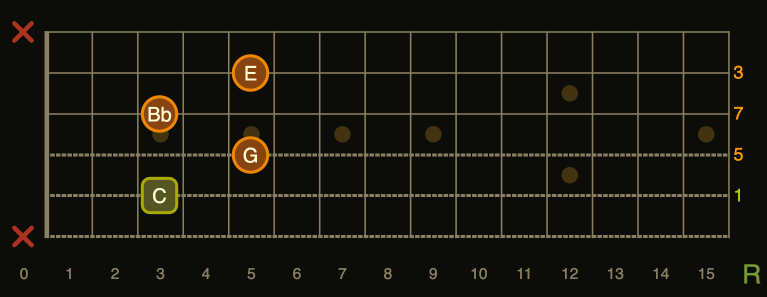
Another common chord type is the 7th chord, also called ‘dominant’, which is created by adding a flat 7th.
So a C7 chord is: C E G Bb.
Jazz Level 1: Basic Jazz Chords
Guitarists start out by learning the grips for triads and 7th chords using cowboy or open chords, and then also barre chords.
This allows them to play most pop and rock tunes.
To move on to genres like Rnb, jazz standards, or bossa nova, guitarists have to move on to so-called ‘jazz chords’, which are major 7th, minor 7th and dominant 7th.
These chords add the 7th note in the scale as follows:
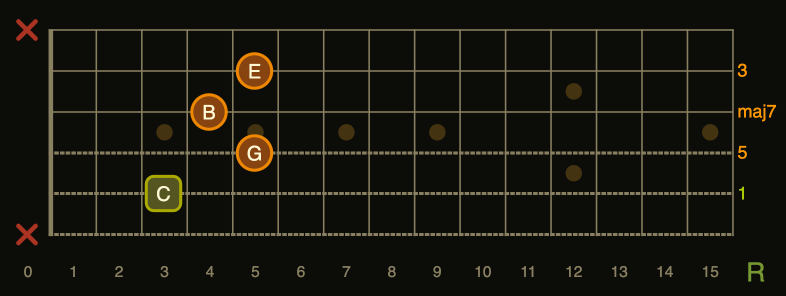
major 7th: 1 3 (5) 7
minor 7th: 1 b3 (5) b7
dominant 7th: 1 3 (5) b7
C major 7th (CM7 or C△7):
C minor 7th (Cm7 or C-7):
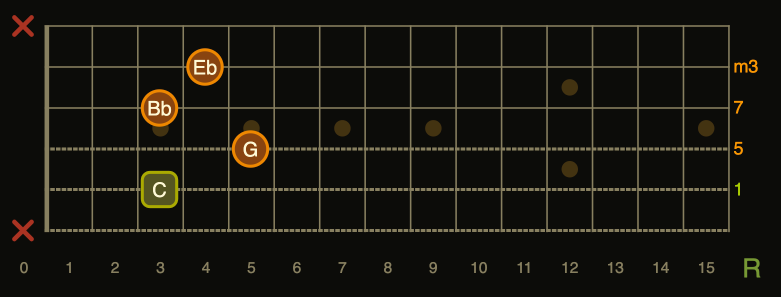
Explanation:
major, minor and dominant are chord qualities
the 1st tone is called the ‘root’
the 3rd and the 7th determine the chord quality; this is what people mean when they refer to ‘chord tones’ because they’re in a sense essential
the 5th tone is optional and often omitted on guitar to allow for extended notes; this is explained further in the next lesson
the flat 7th is actually called ‘the 7th’, whereas the 7th is actually referred to as ‘the major 7th’; this is just the convention
Jazz Level 2: Extended Jazz Chords
While an RnB tune will probably mostly comprise of basic 7th chords, most chords on a jazz or bossa chord chart will be extended in some way.
Examples:
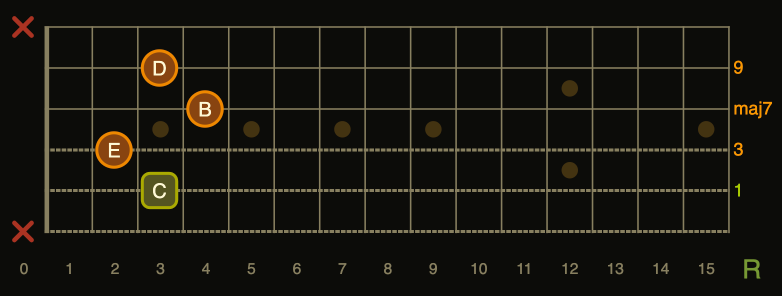
Major: CM9 = 1 3 7 9
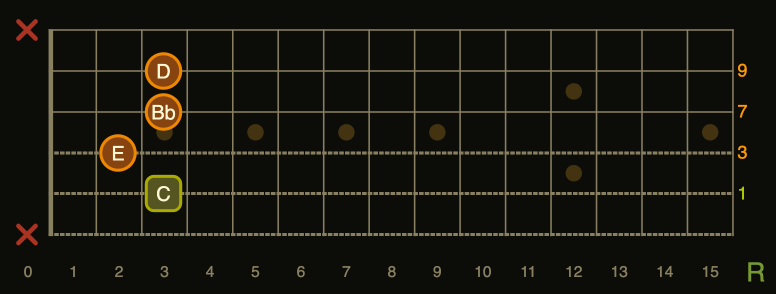
Dominant: C9 = 1 3 b7 9
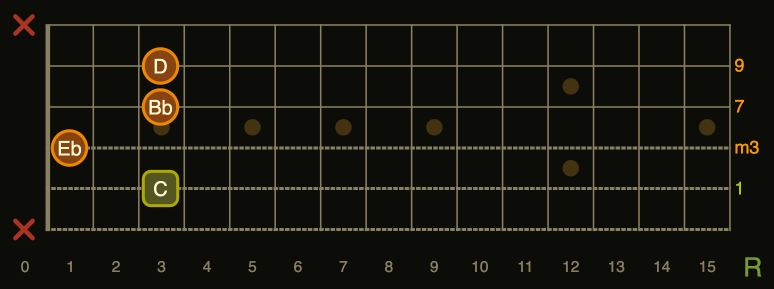
Minor: Cm9 = 1 b3 b7 9
C major 9 (CM9 or C△9):
C9:
C minor 9 (Cm9 or C-9):
Jazz Level 3: Colour Chords
A more modern or complex sound will utilise more extended ‘colour’ chords with additional notes from the scale, often omitting some of the chord tones:
Examples:
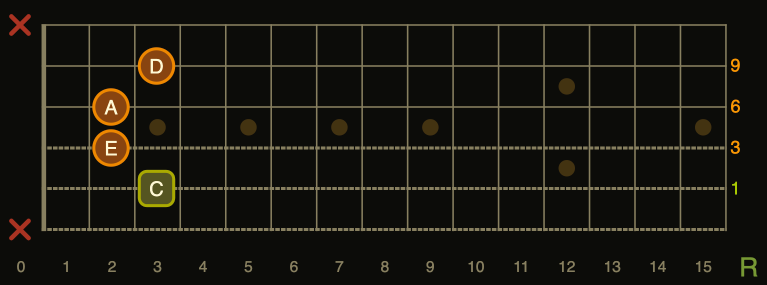
Major: C69 = 1 3 6 9
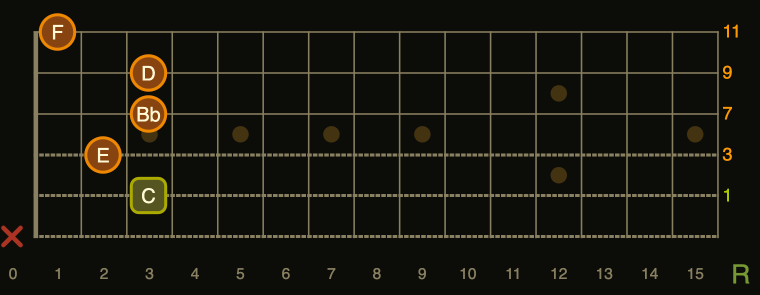
Dominant: C11 = 1 3 b7 9 11
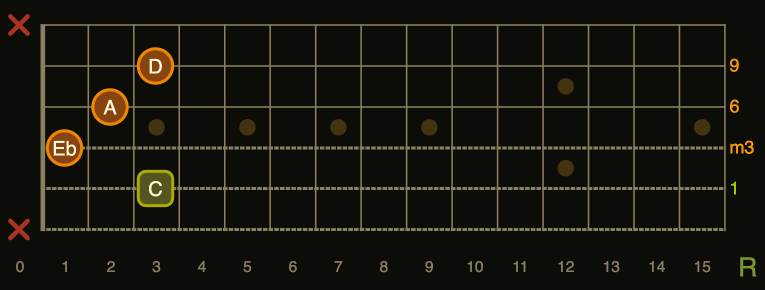
Minor: Cm6/9 = 1 b3 6 9
C69:
C11:
Cm69 or C-69:
Jazz Level 4: Non-Diatonic ‘Outside’ Notes
All the chords above are ‘diatonic’, which means that they use only notes that are in the scale of the chord.
So a C△7 chord will only use notes that are in the C major scale.
A further step toward a modern jazz sound is to use notes that are ‘non-diatonic’ by adding the other notes: b9, #9, b5/#11, #5/b6/b13.
Examples:
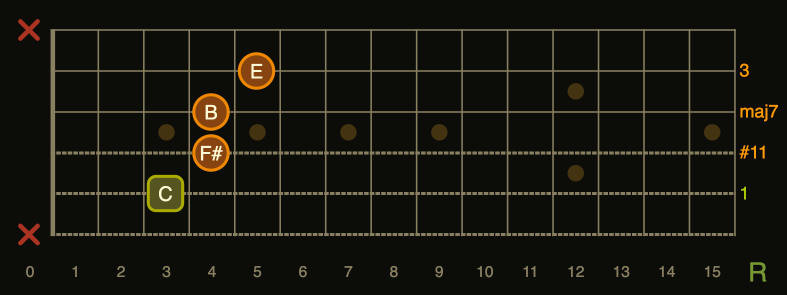
Major: C△7#11 = 1 3 7 #11
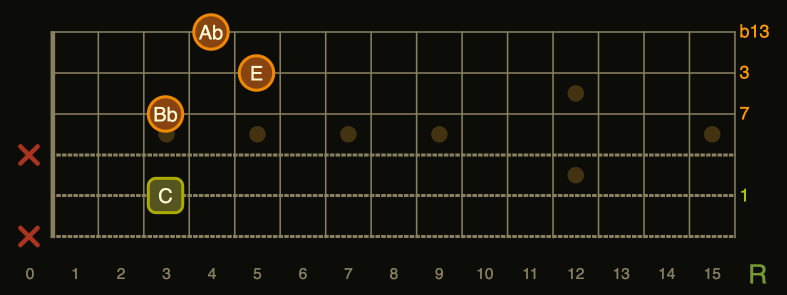
Dominant: C7b13 = 1 3 b7 b13
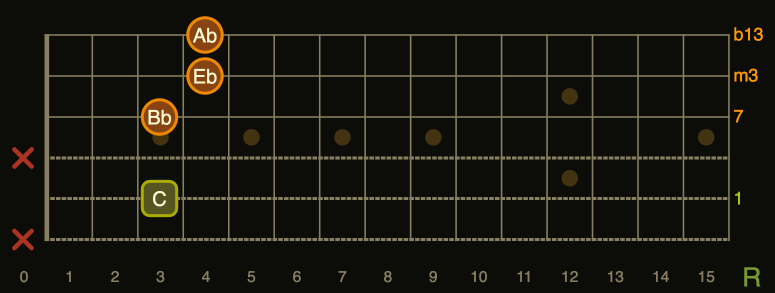
Minor: C-7b13 = 1 b3 7 b13
C△7#11
C7b13
C-7b13
Why learn jazz chords?
It’s not necessary to learn jazz theory if you intend to play pop songs, singer song writer material, or rock music.
Rnb tunes (eg., Jamiroquai) will require level 1 basic jazz chords.
Jazz standards and bossa nova will require at least level 2 extended chords for basic comping (accompaniment).
Modern jazz and jazz improvisation will require more in-depth study of extended harmony at level 3 and non-diatonic ‘reharmonisation’ at level 4. This is what I teach on this substack, stay tuned!
Goals and getting started
The language of jazz theory is initially pretty confusing because there are different ways of notating chords, and there are various archaic conventions that don’t initially make sense.
I’ve found that a great way to get this to stick in your head is to use an online chord analysis tool like oolimo.com to analyse chords in tunes.
I’ve also found that bossa nova tunes, esp. those composed by Antonio Carlos ‘Tom’ Jobim, are an easy and fun way to acquire a solid vocabulary of basic jazz chords.
You kill several birds with that stone, because you learn a lot of great jazz chords, practice lead sheets and chord charts, get jazz chord shapes under your fingers, while building your repertoire.
I will publish Jobim study lead sheets in upcoming posts, so stay tuned!
Leave a comment or questions below!